|
The Long Ships (1963) [Region 2 import] Sidney Poitier
Tommy Cooper - Just Like That [1986]


The Constant Gardener [DVD]
This simple plot description doesn't capture the rich texture and slippery, sinuous movement of The Constant Gardener, superbly directed by Fernando Meirelles (Oscar-nominated for his first film, City of God). Shifting back and forth in time, the movie skillfully captures the engaging romance between Justin and Tessa (Fiennes shows considerably more chemistry with Weisz than he had with Jennifer Lopez in Maid in Manhattan) and builds a vivid, gripping, and all-too-justified paranoia. And on top of it all, the movie is beautiful, due to both its incredible shots of the African landscape (which at times is haunting and unearthly) and the gorgeous cinematography. Featuring an all-around excellent cast, including Bill Nighy (Love Actually), Pete Postlethwaite (In the Name of the Father), and Danny Huston (Silver City).—Bret Fetzer The Polar Express [2004] [DVD]
Zodiac [DVD] [2007]
The pin sharp dialogue and perfectly paced story is accompanied by a first rate cast – most notably Robert Downey Jnr’s hack Paul Avery and Mark Ruffalo’s dogged homicide detective David Toschi. The story veers away swiftly from standard serial killer fare to intense procedural, focussing on the obsession of the men trying to stop Zodiac. And the real accomplishment here is that audiences will feel their regret, because to this day, the killer has never been caught. Despite this and the intimidating running time, those with the patience will be rewarded with one of the best crime thrillers in years. -–Luke Mawson The Neverending Story [DVD] [1985]
Vicky Cristina Barcelona [DVD]

The Gruffalo [DVD] [2009] (and Curious George)
The Sound of Music 45th Anniversary Edition
It’s doubtful you need a review such as this to put across just what a treasure The Sound Of Music is, so it perhaps makes more sense to take a closer look at the Blu-ray package. It brings with it a mass collective of extras, There’s a collection, for instance, which can play as you watch the film, with the sing-along track likely to be the most popular. Furthermore, you’re also treated to material that digs back into the story of the film, and how it came together. The Blu-ray of The Sound Of Music has clearly been something of a labour of love, and the rewards are here for us all to enjoy. And it’s hard not to. The film is a timeless classic, the Blu-ray quite brilliant, and the end result a real must-buy. —Jon Foster The Kite Runner [DVD] [2007]
Take The Money And Run [1968]
The Millionairess [1961]
The Dark Knight (2 Discs) [Blu-ray]
The Prestige [DVD] [2006]
The Motorcycle Diaries [DVD] [2004]
The Last Emperor [1987]
Twister [1996] (REGION 1) (NTSC)
 Twisterwas a mega-million-dollar blockbuster—helmed by a director (Dutchman Jan de Bont) hot off another scorcher hit (Speed)—that flaunted state-of-the-art digital effects and featured a popular leading actress (Helen Hunt) who would win an Academy Award for her next film (As Good As It Gets). But ask anybody who's seen it and they'll tell you who the real star of Twisteris: the cow. Not to give anything away, but the cow is one of those inspired little touches (like, say, Bronson Pinchot's career-making cameo in Beverly Hills Cop) that adds a touch of personality to a gigantic Hollywood production. The story is blown out the window after an impressive prologue in which Hunt's character, as a little girl, witnesses her daddy being sucked into a tornado. Basically, Hunt and Bill Paxton are thrill-seeking meteorologists chasing twisters in order to study them (and help warn people of them, of course) with a new technology they've developed. If you thought the Kansas tornado in The Wizard of Ozwas every bit as scary as the Wicked Witch of the West, then this may be the movie for you. —Jim Emerson
The Big Lebowski [VHS] [1998]
The plot—which finds Lebowski involved in a kidnapping scheme after he's mistaken for a rich guy with the same name—is almost beside the point. What counts here is a steady cascade of hilarious dialogue, great work from Coen regulars John Goodman and Steve Buscemi, and the kind of cinematic ingenuity that puts the Coens in a class all their own. —Jeff Shannon The Pianist [2002] [DVD]
The Blind Side [DVD] [2009]
The Phantom Of The Opera [DVD] [2004]
Director Joel Schumacher, no stranger to visual spectacle, seems to have found a good match in Lloyd Webber's larger-than-life vision of Gaston LeRoux's Gothic horror-romance. His weakness is cuing too many audience-reaction shots and showing too much of the lurking Phantom, but when he calms down and lets Rossum sings "Wishing You Were Somehow Here Again" alone in a silent graveyard, it's exquisite. Those who consider the stage musical shallow and overblown probably won't have their minds changed by the movie, and devotees will forever rue that the movie took the better part of two decades to develop, which prevented the casting of original principals Michael Crawford and Sarah Brightman. Still, The Phantom of the Opera is a welcome exception to the long line of ill-conceived Broadway-to-movie travesties. DVD Features The two-disc edition of The Phantom of the Opera has two major extras. "Behind the Mask: The Story of The Phantom of the Opera" is an hourlong documentary tracing the genesis of the stage show, with interviews by composer Andrew Lloyd Webber, director Harold Prince, producer Cameron Macintosh, lyricists Richard Stilgoe and Charles Hart, choreographer Gillian Lynne, and others. Conspicuously absent are stars Sarah Brightman and Michael Crawford. Both do appear in video clips, including Brightman performing with Colm Wilkinson at an early workshop, and Crawford is the subject of a casting segment. Other brief scenes from the show are represented by a 2001 production. The other major feature is the 45-minute making-of focusing on the movie, including casting and the selection of director Joel Schumacher Both are well-done productions by Lloyd Webber's Really Useful Group. The deleted scene is a new song written by Lloyd Webber and Charles Hart, "No One Would Listen," sung by the Phantom toward the end of the movie. It's a beautiful song that, along with Madame Giry's story, makes him a more sympathetic character. But because that bit of backstory already slowed down the ending, it was probably a good move to cut the song. —David Horiuchi Important note: Initial playback of this DVD defaults to the DTS (Digital Theatre System) soundtrack, therefore customers without such equipment will not hear any sound. Please note that this is NOT a fault with the DVD. If you are not in possession of a DTS compatible sound amplifier, you need to change the film's soundtrack type from the main menu. In order to do this, please follow the instructions below: 1. Click the "set-up" option. 2. Select either Dolby Digital Surround Sound or Dolby Digital Stereo as appropriate. 3. Select "Play Movie". The film will now play with a universal audible soundtrack. The Family Man [DVD] [2000]
 Jack Campbell (Nicolas Cage) is a quintessential Wall Street shark, scoring killer deals by day and shallow escort sex by night in The Family Man. Carp all you want about this derivative premise, with its marginal stereotypes and biased embrace of domestic bliss and dirty nappies. The simple fact is, The Family Man works like a charm. Under the assured direction of Brett Ratner (Rush Hour), this holiday crowd-pleaser offers comedy and chemistry in equal measure, making the hilarity of Jack's predicament a smooth catalyst for that rarest of film romances: the marital love story. Leoni is Cage's perfect match as Jack's idealised but imperfect wife and the films's appeal largely derives from its awareness that any life has its pleasures and pains. While it only flirts with the dark desperation that makes It's a Wonderful Life a classic predecessor, The Family Man is an irresistible what-if fantasy and even its debatable ending rides on a wave of genuine warmth and sentiment. —Jeff Shannon, Amazon.com
The Muppet Christmas Carol [DVD]

Twenty Four Hour Party People [DVD] [2002]
The Notebook [2004]
 When you consider that old-fashioned tearjerkers are an endangered species in Hollywood, a movie like The Notebook can be embraced without apology. Yes, it's syrupy sweet and clogged with clichés, and one can only marvel at the irony of Nick Cassavetes directing a weeper that his late father John—whose own films were devoid of saccharine sentiment—would have sneered at. Still, this touchingly impassioned and great-looking adaptation of the popular Nicholas Sparks novel has much to recommend, including appealing young costars (Ryan Gosling and Rachel McAdams) and appealing old costars (James Garner and Gena Rowlands, the director's mother) playing the same loving couple in (respectively) early 1940s and present-day North Carolina. He was poor, she was rich, and you can guess the rest; decades later, he's unabashedly devoted, and she's drifting into the memory-loss of senile dementia. How their love endured is the story preserved in the titular notebook that he reads to her in their twilight years. The movie's open to ridicule, but as a delicate tearjerker it works just fine. Message in a Bottle and A Walk to Remember were also based on Sparks novels, suggesting a triple-feature that hopeless romantics will cherish. —Jeff Shannon
The Perfect Storm [2000] [DVD]
The Wedding Singer
The Lavender Hill Mob [1951]
 Directed by Charles Crichton, who would much later direct John Cleese in A Fish Called Wanda(1988), 1951's The Lavender Hill Mobis the most ruefully thrilling of the Ealing Comedies. Alec Guinness plays a bowler-hatted escort of bullion to the refineries. His seeming timidity, weak 'r's and punctiliousness mask a typically Guinness-like patient cunning. "I was aware I was widiculed but that was pwecisely the effect I was stwiving to achieve". He's actually plotting a heist. With more conventionally cockney villains Sid James and Alfie Bass in tow, as well as the respectable but ruined Stanley Holloway, Guinness' perfect criminal plan works in exquisite detail, then unravels just as exquisitely, culminating in a nail-biting police car chase in which you can't help rooting for the villains. The Lavender Hill Mobdepicts a London still up to its knees in rubble from World War II, a world of new hope but continued austerity, a budding new order in which everything seems up for grabs; as such it could be regarded as a lighter hearted cinematic cousin to Carol Reed's 1949 masterpiece The Third Man. The Lavender Hill Mobalso sees the first, fleeting on-screen appearance of Audrey Hepburn in the opening sequence. —David Stubbs
The Office : Complete BBC Series 1 [2001]
Set in the offices of a fictional Slough paper merchant, The Office is filmed in the style of a reality television programme. The writing is subtle and deft, the acting wonderful and the characters beautifully drawn: the cadaverous team leader Gareth, a paradigm of Andy McNab's readership; the monstrous sales rep, Chris Finch; and the decent but long-suffering everyman Tim, whose ambition and imagination have been crushed out of him by the banality of the life he dreams uselessly of escaping. The show is stolen, as it was intended to be, by insufferable office manager David Brent, played by cowriter Ricky Gervais. Brent will become a name as emblematic for a particular kind of British grotesque as Alan Partridge or Basil Fawlty, but he is a deeper character than either. Partridge and Fawlty are exaggerations of reality, and therefore safely comic figures. Brent is as appalling as only reality can be. —Andrew Mueller On the DVD The Office, Series 1 is tastefully packaged as a two-disc set appropriately adorned with John Betjeman's poem "Slough". The special features occupy the second disc and consist of a laid-back 39-minute documentary entitled "How I Made The Office by Ricky Gervais", with co-writer Stephen Merchant and the cast contributing. Here we discover that Gervais spends his time on set "mucking around and annoying people", and that actress Lucy Davis (Dawn) is the daughter of Jasper Carrott; as well as seeing parts of the original short film and the original BBC pilot episode; plus we get to enjoy many examples of the cast corpsing throughout endless retakes. There are also a handful of deleted scenes, none of which were deleted because they weren't funny. —Mark Walker XXX 2 - The Next Level [DVD] [2005]
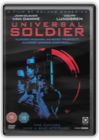
Universal Soldier [DVD] [1991]
The Ultimate Bourne Collection Boxset [DVD] [2007]
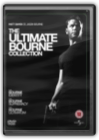
And it’s ironic too, given that the franchise kicked off with its weakest instalment. The Bourne Identity finds the title character (played by Matt Damon) without knowledge of who he is, yet with a whole host of deadly skills, and for two thirds of its running time is a strong and enjoyable action thriller. A muddled last act spoils it slightly, but fortunately, it brought in enough to convince the studio to pony up for a sequel. What a sequel it is, too. The Bourne Supremacy is an electric, pulse-pounding second episode, as Bourne this time is forced to confront his identity issues again, after being framed for a murder he didn’t commit. It’s a compulsive game of cat and mouse with some superb moments, and it leaves you salivating for the concluding chapter. That came in the shape of The Bourne Ultimatum, and this proves not only to be a terrific ending to the franchise, it’s also the best of the three films. The word relentless barely does it justice, but in terms of direction, staging and draw, it simply has had no big screen blockbuster equal in some years. The end result is a trilogy that diligently tells a well-structured story, and injects it with fascinating characters, amazing set pieces and immense rewatch value. The Ultimate Bourne Collection simply demands to be seen and rewarded. And a fourth chapter wouldn’t do any harm, either… —Simon Brew The Shawshank Redemption [1995]
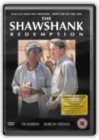
Tim Robbins plays a banker named Andy who is sent to Shawshank Prison on a murder charge, but as he gets to know a life-term prisoner named Red (Morgan Freeman), we soon realise his claims of innocence are credible. We also realise that Andy's calm, quiet exterior hides a great reserve of patience and fortitude, and Red comes to admire this mild-mannered man who first struck him as weak and unfit for prison life. So it is that The Shawshank Redemption builds considerable impact as a prison drama that defies the conventions of the genre (violence, brutality, riots) to illustrate its theme of faith, friendship and survival. Nominated for seven Academy Awards including Best Picture, Actor and Screenplay, it's a remarkable film (which movie lovers count among their all-time favourites) that signalled the arrival of a promising new filmmaker. On the DVD: The Shawshank Redemption limited-edition release contains the complete 48-minute documentary "Shawshank: The Redeeming Feature", including interviews with all the principal cast and crew; plus more interview material and the theatrical trailer. —Jeff Shannon Tim Burton's Corpse Bride [DVD] [2005]
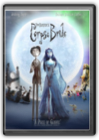
But the wedding rehearsal goes sour and, in the kind of Goth-eerie forest that only exists in Burton-land, Victor suddenly finds himself accidentally married to the Corpse Bride, voiced by Helena Bonham Carter, a blue-tinted, half-skeletal beauty with a loquacious maggot installed behind one prone-to-popping eyeball. This being a Burton creation, the underworld of the dead is a lively and colorful place indeed, and Danny Elfman's songs and score make it even livelier, presenting Victor with quite a dilemma: Should he return above-ground to Victoria, or remain devoted to his corpse bride? At a brisk 76 minutes, Burton's graveyard whimsy never wears out its welcome, and the voice casting is superbly matched the film's gloriously amusing character design, guaranteed to yield a wealth of gruesome toys and action figures for many Halloweens to come. —Jeff Shannon The Aviator [DVD] [2004]

The Emperor's New Groove [2001]
 The Emperor's New Groovewas originally developed as an epic called Kingdom of the Sunand lost scale and most of Sting's song score (some of which can be heard on the soundtrack) on its way to the screen. The end result is the lightest Disney film in many a moon, a joyous romp akin to Aladdinin its quotient of laughs for children and adults. The original story centres on the spoiled teenage emperor Kuzco (David Spade), who enjoys getting the best of his Aztecan subjects. When he fires Yzma (Eartha Kitt), his evil sorceress, she seeks revenge and turns Kuzco into a llama with the help of Kronk, her hunk of the month (Patrick Warburton). Alone in the jungle, the talking llama is befriended by Pacha (John Goodman), who has just been told to vacate his pastoral home by the human Kuzco. What's an ego to do? That's pretty much the story and the characters—simple, direct, fun—a Disney film on a diet. For any fan of the acidic humour of Spade, this is essential viewing. As narrator of his tale, Kuzco uses a sarcastic tone to keep the story jumping with plenty of fun asides (he even "stops" the film at one point to make sure you know the story is about him). Even better is character actor Warburton (Elaine's stuck-up boyfriend on Seinfeld), who steals every scene as the dim-witted, but oh-so-likable Kronk. There's even a delicious Tom Jones number that starts the film off with a bang. —Doug Thomas, Amazon.com
The Parole Officer [2001]
 Although there are one or two belly laughs along the way, for the most part The Parole Officergets by on the pleasantly old-fashioned charm of a latter-day Ealing comedy. And despite a handful of gross-out moments (involving a roller coaster at Blackpool, a severed head and a wasp) most of the humour comes from the interaction of a good ensemble cast.
It's the first big-screen vehicle for Steve Coogan, who plays the titular officer as a watered-down, more likeable version of his most famous creation, Alan Partridge. After being set up by a corrupt detective Coogan's hapless Simon Garden—in fact always identified as a Probation Officer, so presumably the film's title is an attempt to attract a transatlantic audience—must recruit a motley gang of his ex-con clients to plan and execute a bank robbery in Manchester. Indeed, one of the film's principal attractions is its affectionate use of that city centre as a setting instead of the more usual seedy London locations of most British caper-comedies. Coogan's gang are a familiarly dysfunctional bunch, redeemed by sympathetic performances from, notably, Om Puri as irascible serial bigamist George and the young Emma Williams as serial car thief Kirsty. Not enough effort goes into fleshing out the characters, though, and in particular Lena Headey as Coogan's policewoman girlfriend is far too thinly sketched to seem convincing. However, much fun is had by all as the team bond, bicker and construct, A Team-style, the tools they need for the big heist. The bank raid itself is the film's highlight and features a surprising deus ex machinaappearance from a very distinguished guest star. If The Parole Officernever stretches to the sublime heights (or psychological depths) of I'm Alan Partridge, it does play out in a brisk 90 minutes like an extended episode of Coogan's Run; which is to say it's got plenty of easygoing charm even if it never pushes any boundaries. On the DVD:the handful of extra features include a surprisingly serious commentary from Coogan, cowriter Henry Normal, director John Duigan and producer Duncan Kenworthy. More interesting is the handful of deleted scenes, in which we find that some precious character development was sacrificed in the interests of pace (as well as a couple of perfectly good jokes). There's a 22-minute featurette, which isn't really a "making of" but just a series of interviews with the principal cast, plus the trailer and Atomic Kitten's "Eternal Flame" video. The picture is a good anamorphic (16:9) ratio with Dolby 5.1 sound. —Mark Walker The Four Feathers [1939] [DVD]
 Far too many film versions of the The Four Feathers have been made over the years, which is especially surprising considering that this 1939 Korda brothers production is surely definitive. The film simultaneously celebrates and pokes fun at British imperialism, showing the kind of dogged stiff-upper-lippery that forged an empire, but also the blinkered attitudes and crass snobbishness of the ruling classes (and those plummy accents—did people ever really talk like that?). Whatever political subtext may or may not be read into it, though, the film is best celebrated for its magnificent vistas: partially made on location in the Sudan, as well as at the famous Denham Studios, this is British cinema from the days when it thought to rival Hollywood for sheer spectacle. Vincent Korda's production design and the glorious early colour cinematography are helped greatly by fellow Hungarian émigré Miklos Rozsa's epic score.
John Clements is the notional hero, the man who is determined to show the world he is not a coward after resigning his commission (even though it would surely have saved everyone a lot of bother if he had just stuck with it) but the film is stolen by Ralph Richardson, magnificent as an officer struck blind and led to safety by Clements' Harry Faversham. The latter scenes when Richardson's Captain Durrance realises the truth and its implications are the most poignant and emotionally truthful in the film. C Aubrey Smith is delightful as the old buffer who relives his battles on the dinner table; to a modern audience, however, the "blackface" casting of John Laurie as the Khalifa strikes a discordant note. But adjusting some expectations for its vintage, this is a triumph of derring-do and far and away the most gripping version of this oft-told story on film. —Mark Walker Unforgiven [1992]
 Winner of four Academy Awards, including best picture, director, supporting actor and best editing, Clint Eastwood's 1992 masterpiece stands as one of the greatest and most thematically compelling Westerns ever made. "The movie summarised everything I feel about the Western," said Eastwood at the time of the film's release. "The moral is the concern with gunplay." To illustrate that theme, Eastwood stars as a retired, once-ruthless killer-turned-gentle-widower and hog farmer. He accepts one last bounty-hunter mission—to find the men who brutalised a prostitute—to help support his two motherless children. Joined by his former partner (Morgan Freeman) and a cocky greenhorn (Jaimz Woolvett), he takes on a corrupt sheriff (Oscar winner Gene Hackman) in a showdown that makes the viewer feel the full impact of violence and its corruption of the soul. Dedicated to Eastwood's mentors Sergio Leone and Don Siegel and featuring a colourful role for Richard Harris, Unforgiven is arguably Eastwood's crowning directorial achievement. —Jeff Shannon
The Core [DVD] [2003]
The Princess Bride [DVD] [1987]
You've Got Mail [1999]
 By now, Tom Hanks and Meg Ryan have amassed such a fund of goodwill with moviegoers that any new onscreen pairing brings nearly reflexive smiles. In You've Got Mail, the quintessential boy and girl next door repeat the tentative romantic crescendo that made Sleepless in Seattle, writer-director Nora Ephron's previous excursion with the duo, a massive hit. The prospective couple do actually meet face to face early on but Mailotherwise repeats the earlier feature's gentle, extended tease of saving its romantic resolution until the final, gauzy shot.
The underlying narrative is an even more old-fashioned romantic pas de deux that is casually hooked to a newfangled device. The script, cowritten by the director and her sister, Delia Ephron, updates and relocates the Ernst Lubitsch classic, The Shop Around the Corner, to contemporary Manhattan, where Joe Fox (Hanks) is a cheerfully rapacious merchant whose chain of book superstores is gobbling up smaller, more specialized shops such as the children's bookstore owned by Kathleen Kelly (Ryan). Their lives run in close parallel in the same idealized neighbourhood yet they first meet anonymously, online, where they gradually nurture a warm, even intimate correspondence. As they begin to wonder whether this e-mail flirtation might lead them to be soul mates, however, they meet and clash over their colliding business fortunes. It's no small testament to the two stars that we wind up liking and caring about them despite the inevitable (and highly manipulative) arc of the plot. Although their chemistry transcended the consciously improbable romantic premise of Sleepless, enabling director Ephron to attain a kind of amorous soufflé, this time around there's a slow leak that considerably deflates the affair. Less credulous viewers will challenge Joe's logic in prolonging the concealment of his online identity from Kathleen, and may shake their heads at Ephron's reinvention of Manhattan as a spotless, sun-dappled wonderland where everybody lives in million-dollar apartments and colour co-ordinates their wardrobes for cocktail parties. —Sam Sutherland The Kingdom [2007]
The Mummy Returns [DVD] [2001]
John Hannah (as Weisz's brother) and Oded Fehr (as mystical warrior Ardeth Bay) also return from The Mummy, and trouble begins when Alex dons the Scorpion King's ancient bracelet, coveted by the evil mummy Imhotep (Arnold Vosloo), who's been revived by... oh, but does any of this matter? With a plot so disposable that it's impossible to care about anything that happens, The Mummy Returns is best enjoyed as an intermittently amusing and physically impressive monument of Hollywood machinery, with gorgeous sets that scream for a better showcase, and digital trickery that tops its predecessor in ambition, if not in payoff. By the time our heroes encounter a hoard of ravenous pygmy mummies, you'll probably enjoy this movie in spite of itself. —Jeff Shannon TMNT - Teenage Mutant Ninja Turtles (2007) [DVD]

The Passion of the Christ [2004]
 After all the controversy has subsided, Mel Gibson's The Passion of the Christwill remain a force to be reckoned with. In the final analysis, "Gibson's Folly" is an act of personal bravery and commitment on the part of its director, who self-financed this $25-30 million production to preserve his artistic goal of creating The Passion of Christ ("Passion" in its original context meaning "suffering") as a quite literal, in-your-face interpretation of the final 12 hours in the life of Jesus, scripted almost directly from the Gospels (and spoken in Aramaic and Latin with a relative minimum of subtitles) and presented as a relentless, 126-minute ordeal of torture and crucifixion. For Christians and non-Christians alike, this film does not "entertain" and it's not a film that one can "like" or "dislike" in any conventional sense. (It is also emphatically nota film for children or the weak of heart.) Rather, The Passionis a cinematic experience that serves an almost singular purpose: to show the scourging and death of Jesus Christ in such horrifically graphic detail (with Gibson's own hand pounding the nails in the cross) that even non-believers may feel a twinge of sorrow and culpability in witnessing the final moments of the Son of God, played by Jim Caviezel in a performance that's not so much acting as a wilful act of submission, so intense that some will weep not only for Christ, but for Caviezel's unparalleled test of endurance.
If one judges what is on the screen (so gloriously served by John Debney's score and Caleb Deschanel's cinematography), there is fuel for debate about the film's alleged anti-Semitic slant but no obvious malice aforethought; the Jews under Caiphas are just as guilty as the barbaric Romans who carry out the execution, especially after Gibson excised (from the subtitles, if not the soundtrack) the film's most controversial line of dialogue. If one accepts that Gibson's intentions are sincere, The Passioncan be accepted for what it is: a gruelling, straightforward (some might say unimaginative) and extremely violent depiction of The Passion, guaranteed to render devout Christians speechless while it intensifies their faith. Non-believers are likely to take a more dispassionate view, and some may resort to ridicule. But one thing remains undebatable: with The Passion of the Christ, Gibson puts his money where his mouth is. You can praise or damn him all you want, but you've got to admire his chutzpah. —Jeff Shannon Without A Paddle [DVD] [2004]
The Simpsons: Complete Season 2
 First aired in 1990-91, the second series of The Simpsonsproved that, far from being a one-joke sitcom about the all-American dysfunctional family, it had the potential to become a whole hilarious universe. The animation had settled down (in the first series, the characters look eerily distorted when viewed years later), while Dan Castellaneta, who voiced Homer, decided to switch from a grumpy Walter Matthau impression to a more full-on, bulbous wail. The series' population of minor characters began to grow with the inclusion of Dr Hibbert, McBain and attorney Lionel Hutz, while the writers became more seamless in their ability to weave pastiche of classic movies into the plot lines. While relatively "straight" by later standards (the surreal forays of future seasons are kept in check here), Season Two contains some of the most memorable episodes ever made, indeed some of the finest American comedy ever made.
These include "O Brother, Where Art Thou?", in which Homer is reunited with, and ruins the business of, his long-lost brother ("He was an unbridled success—until he discovered he was a Simpson"), "Dead Putting Society", in which Homer lives out his rivalry with neighbour Ned Flanders through a crazy-golf competition between the sons ("If you lose, you're out of the family!") and one of the greatest ever episodes, "Lisa's Substitute", which not only features poor little Lisa's crush on a supply teacher voiced by Dustin Hoffman but also Bart's campaign to become class president. "A vote for Bart is a vote for anarchy!", warns Martin, the rival candidate. By way of a retort, Bart promises faithfully, "A vote for Bart is a vote for anarchy!". —David Stubbs On the DVD:The Simpsons, Season 2, like its DVD predecessor, has neat animated menus on all four discs as well as apparently endless copyright warnings, but nothing as useful as a "play all" facility. The discs are more generously filled than Season 1, however, and each episode has an optional group commentary from Matt Groening and various members of his team. The fourth disc has sundry snippets including the Springfield family at the Emmy Awards ceremony, Julie Kavner dressed up as Bart at the American Music Awards and videos for both "Do the Bartman" and "Deep, Deep Trouble" (all with optional commentary). There are two short features dating from 1991: director David Silverman on the creation of an episode and an interview with Matt Groening. TV commercials for butterfinger bars, foreign language clips and picture galleries round out the selection. Picture is standard 4:3 and the sound is good Dolby 5.1. —Mark Walker The Simpsons: Christmas with the Simpsons [1990]
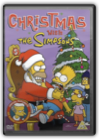 The Simpsons have never been as big on Christmas as they have on Halloween and while Christmas with The Simpsonscontains five episodes, one of them, "Mr Plow", is only seasonal insofar as it contains snow. Fortunately, it's also a cracker, with Homer resorting to low-budget screen advertising to launch his snowploughing business ("It may be a lousy channel but the Simpsons are on TV!") before a pep-talk he gives to inebriate buddy Barney encourages the latter to set up as a rival.
This compilation also contains "The Simpsons Roasting on an Open Fire", the very first Simpsonsepisode broadcast, in which their dog Santa's Little Helper is introduced. Years on, this episode looks ancient and a little average by later, stratospheric standards. "Miracle on Evergreen Terrace" is a slightly downbeat parody of It's a Wonderful Life, in which the town turns on the Simpsons after helping them out when Bart lied about their presents being burgled. "Grift of the Magi" features luckless ex-sitcom star Gary Coleman reprising his real-life job as a security guard as an unscrupulous toy company aggressively merchandise a faddish new toy in time for Christmas ("If you don't have Funzo, you're nothing".) The plot is very similar to "She of Little Faith"—uncharacteristic repetition for this show—but that's forgiven as Lisa is forced to become a Buddhist following the commercialisation of the church in another episode that's as un-seasonally un-cosy as you'd expect from the greatest TV programme ever made. On the DVD: Christmas with The Simpsonscontains one extra feature: a short montage of evil power plant boss Mr Burns' finest comedic moments, including his tussle with baby Maggie over ownership of teddybear BoBo and a money fight with the servile Smithers. —David Stubbs The Ladykillers [DVD]
Watchmen (1-Disc) [DVD]
That Thing You Do! [1997] [DVD]
True Grit [1969] (and Stagecoach)
 John Wayne hams it up as a one-eyed, broken-down marshal in this 1969 adaptation of Charles Portis's bestselling novel. Kim Darby plays the formal-speaking adolescent who goes to Wayne for help tracking down her father's killer, and singer Glen Campbell straps on his guns to join the quest. Directed by old lion Henry Hathaway (Rawhide), True Gritis largely a showcase for Wayne (who finally won an Oscar), but it is also a decent Western with a particularly stirring final act. —Tom Keogh
The Cruel Sea [DVD] [1953]
 Nicholas Monsarrat's novel is an unflinching, realistic and emotionally involving account of naval life during the Second World War in which the "heroes" are the men, the "heroines" the ships and the "villain" is not so much the German U-Boats lurking below as "the cruel sea" itself. This 1953 film has become a classic of British cinema largely because it is a straightforward, no-frills adaptation of the book and retain's much of the original's compelling yet almost understated dramatic focus. On convoy duty in the North Atlantic, the crew of HMS Compass Rose face as a matter of routine the threat of destruction from U-Boats as well as a constant struggle against the elements. The convoys themselves are Britain's only lifeline and their loss would lead to certain defeat, but in the early years of the war the ships sent to protect them can do almost nothing to prevent the U-Boat attacks. Jack Hawkins gives one of his finest performances as Captain Ericson, the commander who has to balance destroying the enemy against saving the lives of the men under his care. In one unforgettable scene—a crucial turning point for all the characters—he must decide whether to depth charge a suspected submarine despite the presence of British sailors in the water. As with the book, the individual officers and their lives are carefully delineated, helped by the strength of a cast of (then) young actors (notably Donald Sinden and Denholm Elliot). Ultimately what makes The Cruel Sea such an undeniable classic is that it has neither the flag-waving jingoism nor the war-is-hell melodrama so common to most war movies: instead it relates in an almost matter-of-fact way the bitterness of the conflict at sea fought by ordinary men placed in the most extraordinary of circumstances. —Mark Walker
The Prince of Egypt [1998](REGION 1) (NTSC)
 Nearly every biblical film is ambitious, creating pictures to go with some of the most famous and sacred stories in the Western world. DreamWorks' first animated film, The Prince of Egypt was the vision of executive producer Jeffrey Katzenberg after his ugly split from Disney, where he had been acknowledged as a key architect in that studio's rebirth (The Little Mermaid, etc.). His first film for the company he helped create was a huge, challenging project without a single toy or merchandising tie-in, the backbone du jour of family entertainment in the 1990s.
Three directors and 16 writers succeed in carrying out much of Katzenberg's vision. The linear story of Moses is crisply told, and the look of the film is stunning; indeed, no animated film has looked so ready to be placed in the Louvre since Fantasia. Here is an Egypt alive with energetic bustle and pristine buildings. Born a slave and set adrift in the river, Moses (voiced by Val Kilmer) is raised as the son of Pharaoh Seti (Patrick Stewart) and is a fitting rival for his stepbrother Rameses (Ralph Fiennes). When he learns of his roots—in a knockout sequence in which hieroglyphics come alive—he flees to the desert, where he finds his roots and heeds God's calling to free the slaves from Egypt. Katzenberg and his artists are careful to tread lightly on religious boundaries. The film stops at the parting of the Red Sea, only showing the Ten Commandments—without commentary—as the film's coda. Music is a big part (there were three CDs released) and Hans Zimmer's score and Stephen Schwartz's songs work well—in fact the pop-ready, Oscar-winning "When You Believe" is one of the weakest songs. Kids ages 5 and up should be able to handle the referenced violence; the film doesn't shy away from what Egyptians did to their slaves. Perhaps Katzenberg could have aimed lower and made a more successful animated film, but then again, what's a heaven for? —Doug Thomas The Village [DVD] [2004]

The African Queen [1951]
 The 1951 John Huston classic, set in Africa during World War I, garnered Humphrey Bogart an Oscar for his role as a hard-drinking riverboat captain in Africa, who provides passage for a Christian missionary spinster (Katharine Hepburn). Taking an instant, mutual dislike to one another, the two endure rough waters, the presence of German soldiers, and their own bickering to finally fall into one another's arms. The African Queenis classic Huston material—part adventure, part quest—but this time with a pair of characters who'd all but given up on happiness. Bogart (a longtime collaborator with Huston on such classics as The Maltese Falconand Key Largo) and Hepburn have never been better, and support from frequent Huston crony Robert Morley (Beat the Devil, also featuring Bogart) adds some extra dimension and colour. —Tom Keogh
The Lord of the Rings: The Fellowship of the Ring (Two Disc Theatrical Edition) [2001]
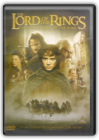 A marvellously sympathetic yet spectacularly cinematic treatment of the first part of Tolkien's trilogy, Peter Jackson's The Lord of the Rings: The Fellowship of the Ringis the film that finally showed how extraordinary digital effects could be used to support story and characters, not simply overwhelm them. Both long-time fantasy fans and newcomers alike were simultaneously amazed, astonished and left agog for parts two and three.
Jackson's abiding love for the source material comes across in the wealth of incidental detail (the stone trolls from The Hobbit, Bilbo's hand-drawn maps); and even when he deviates from the book he does so for sound dramatic reasons (the interminable Tom Bombadil interlude is deleted; Arwen not Glorfindel rescues Frodo at the ford). New Zealand stands in wonderfully for Middle-Earth and his cast are almost ideal, headed by Elijah Wood as a suitably naïve Frodo, though one with plenty of iron resolve, and Ian McKellen as an avuncular-yet-grimly determined Gandalf. The set-piece battle sequences have both an epic grandeur and a visceral, bloody immediacy: the Orcs, and Saruman's Uruk-Hai in particular, are no mere cannon-fodder, but tough and terrifying adversaries. Tolkien's legacy could hardly have been better served. On the DVD:The Lord of the Rings: The Fellowship of the Ringtwo-disc set presents the original theatrical release (approx 171 minutes) on the first disc with a vivid Dolby 5.1 soundtrack and a simply splendid anamorphic print that allows even the darkest recesses of Moria to be glimpsed. The second disc contains 15 short behind-the-scenes pieces originally seen on the official Web site plus three substantial featurettes. The Houghton Mifflin "Welcome to Middle-Earth" is a 16-minute first look at the transition from page to screen, most interesting for its treasurable interview with Tolkien's original publisher Rayner Unwin. "Quest for the Ring" is a pretty standard 20-minute Fox TV special with lots of cast and crew interviews. Better is the Sci-Fi Channel's "A Passage to Middle-Earth", a 40-minute special that goes into a lot more detail about many aspects of the production and how the creative team conceived the film's look. Most mouth-watering for fans who just can't wait is a 10-minute Two Towerspreview, in which Peter Jackson personally tantalises us with behind-the-scenes glimpses of Gollum and Helm's Deep, plus a tasty three-minute teaser for the four-disc Fellowshipspecial edition. Rounding out a good package are trailers, Enya's "May It Be" video and a Two Towersvideo game preview.—Mark Walker The Lord of the Rings: The Two Towers (Two Disc Theatrical Edition) [2002]
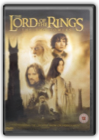 With The Lord of the Rings: The Two Towers, the focus of Tolkien's epic story moves from the fantastic to the mythic, from magic and monsters towards men and their deeds, as the expanding panorama of Middle-earth introduces us to the Viking-like Riders of Rohan and the men of Gondor. Which is not to say that Peter Jackson's three-hour second instalment doesn't have its fair share of amazing new creatures—here we meet Wargs, Oliphaunts and winged Nazgul, to name three—just that the film is concerned more with myth-making on a heroic scale than the wide-eyed wonder of The Fellowship of the Ring.
There's no time for recapitulation, as a host of new characters are introduced in rapid succession. In Rohan we meet the initially moribund King Theoden (Bernard Hill); his treacherous advisor Grima Wormtongue (Brad Dourif); his feisty niece Eowyn (Miranda Otto); and his strong-willed nephew Eomer (Karl Urban). Faramir (David Wenham), brother of Boromir, is the other principal human addition to the cast. The hobbits, though, encounter the two most remarkable new characters, both of whom are digitally generated: in Fangorn Forest, Merry and Pippin are literally carried away by Treebeard, a dignified old Ent; while Frodo and Sam capture the duplicitous Gollum, whose fate is inextricably intertwined with that of the Ring. The film stands or falls with Gollum. If the characterisation had gone the way of Jar Jar Binks, The Two Towerswould have been ruined, notwithstanding all the spectacle and grandeur of the rest. But Gollum is a triumph, a tribute both to the computer animators and the motion-captured performance of Andy Serkis: his "dialogues", delivered theatre-like direct to the audience, are a masterstroke. Here and elsewhere Jackson is unafraid to make changes to the story line, bringing Frodo and Sam to Osgiliath, for example, or tipping Aragorn over a cliff. Yet the director's deft touch always seems to add not detract from Tolkien's vision. Just three among many examples: Aragorn's poignant dreams of Arwen (Liv Tyler); Gimli's comic repartee even in the heat of battle; and the wickedly effective siege weapons of the Uruk-Hai (which signify both Saruman's mastery and his perversion of technology). The climactic confrontation at Helm's Deep contains images the like of which have simply never been seen on film before. Almost unimaginably, there's so much more still to come in the Return of the King. On the DVD:The Two Towerstwo-disc set, like the Fellowshipbefore it, features the theatrical version of the movie on the first disc, in glorious 2.35:1 widescreen, accompanied by Dolby 5.1 or Dolby Stereo sound options. As before, commentaries and the really in-depth features are held back for the extended four-disc version. Such as they are, all the extras are reserved for Disc Two. The 14-minute documentary On the Setis a run-of-the-mill publicity preview for the movie; more substantial is the 43-minute Return to Middle-Earth, another promotional feature, which at least has plenty of input from cast and crew. Much more interesting are the briefer pieces, notably: Sean Astin's charming silent short The Long and the Short of It, plus an amusing making-of featurette; a teaser trailer for the extended DVD release; and a tantalising 12-minute sneak peek at Return of the King, introduced by Peter Jackson, in which he declares nonchalantly that "Helm's Deep was just an opening skirmish"! —Mark Walker The Lord of the Rings: The Return of the King (Two Disc Theatrical Edition) [2003]
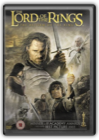 Peter Jackson's Lord of the Ringstrilogy, triumphantly completed by the 11-Oscar-winning The Return of the King, sets out to show that Tolkien's epic work, once derided as mere adolescent escapism, is not just fodder for the best mass entertainment spectacle ever seen on the big screen, but is also replete with emotionally satisfying meditations on the human condition. What is the nature of true friendship? What constitutes real courage? Why is it important for us to care about people living beyond our borders? What does it mean to live in harmony with the environment and what are the consequences when we do not? When is war justifiable and when is it not? What things are really worth fighting for? These are the questions that resonate with a contemporary audience: to see our current social and political concerns mirrored—and here finally resolved—in Middle-earth is to recognise that Jackson's Lord of the Ringsis both a parable for our times andmagical cinematic escapism.
As before, in this concluding part of the trilogy the spectacle never dwarfs (sic) the characters, even during Shelob the spider's pitiless assault, for example, or the unparalleled Battle of the Pelennor Fields, where the white towers of Minas Tirith come under ferocious attack from Troll-powered siege weapons and—in a sequence reminiscent of the Imperial Walkers in The Empire Strikes Back—Mammoth-like Mumakil. The people and their feelings always remain in focus, as emphasised by Jackson's sensitive small touches: Gandalf reassuring a terrified Pippin in the midst of battle that death is not to be feared; Frodo's blazing anger at Sam's apparent betrayal; Faramir's desire to win the approval of his megalomaniac father; Gollum's tragic cupidity and his final, heartbreaking glee. And at the very epicentre of the film is the pure heart of Samwise Gamgee—the real hero of the story. At over three hours, there are almost inevitably some lulls, and the film still feels as if some key scenes are missing: a problem doubtless to be rectified in the extended DVD edition. But the end, when it does finally arrive—set to Howard Shore's Wagnerian music score—brings us full circle, leaving the departing audience to wonder if they will ever find within themselves even a fraction of the courage of a hobbit. —Mark Walker The Road To El Dorado [2000] (and Chicken Run)
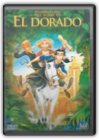 In its third foray into animated features, The Road to El Dorado, Dreamworks came up with something unfortunate: the routine animated picture. Plagued with production problems (it was originally conceived as a mould-breaking 12-rated adventure), the likable film is a Hope/Crosby-style road picture about two scallywags who stumble upon the Latin American paradise of El Dorado, the mythical city with riches of gold. Kenneth Branagh and Kevin Kline are quite fun as Miguel and Tuilo, two Spanish con artists who are shipwrecked in the New World with a scene-stealing horse. The pair follow a map to the secret city where their loyalty will be tested: do they return home rich men or continue to live in this paradise? Of course there are some obstacles: a high priest (Armand Assante) is locked in a power struggle with the benevolent chief (Edward James Olmos) and the perfunctory girlfriend (Rosie Perez) puts the two friends at odds. Like too many of the animated features of its time, The Road to El Doradoimpresses only on a visual level (it's drenched in gorgeous greens and golds). The story and Elton John's songs are quite forgettable; only Branagh and Kline's playful banter keeps the film alive. Slick and light, it's a fine 83-minute entertainment for ages 5 and up, including the non-discriminating adult. —Doug Thomas, Amazon.com
The Interpreter [DVD] [2005]
The Fabulous Baker Boys [1989]
The Blues Brothers / Blues Brothers 2000 [1980]
 The Blues Brothers: John Belushi and Dan Aykroyd—as "legendary" Chicago brothers Jake and Elwood Blues—brought their "Saturday Night Live" act to the big screen in this action-packed hit from 1980. As Jake and Elwood struggle to reunite their old band and save the Chicago orphanage where they were raised, they wreak enough good-natured havoc to attract the entire Cook County police force. The result is a big-budget stunt-fest on a scale rarely attempted before or since, including extended car chases that result in the wanton destruction of shopping malls and more police cars than you can count. Along the way there's plenty of music to punctuate the action, including performances by Ray Charles, Aretha Franklin, Cab Calloway and James Brown that are guaranteed to knock you out. Keep an eye out for Steven Spielberg as the city clerk who stamps some crucial paperwork near the end of the film.
The Blues Brothers 2000: It's hard to ignore the sad and conspicuous absence of the late John Belushi, but this long-delayed sequel still has Dan Aykroyd to keep the music alive. Once again, Elwood's trying to reunite the original Blues Brothers Band, and this time he's got a strip-joint bartender (John Goodman) and a 10-year-old orphan named Buster (J Evan Bonifant) joining him at centre stage. It's a shameless clone of the first film, and nobody—especially not Aykroyd or director John Landis—seems to care that the story's not nearly as fun as the music. Of course there's a seemingly endless parade of stunts, including a non-stop pileup of police cars that's hilariously absurd, but what really matters here—indeed, the movie's only saving grace—is the great line-up of legendary blues musicians. Aretha Franklin, James Brown, Junior Wells, Eric Clapton, BB King, Jonny Lang, Eddie Floyd and Blues Traveler are among the many special guests assembled for the film, and their stellar presence makes you wonder if the revived Blues Brothers shouldn't remain an obscure opening act. —Jeff Shannon, Amazon.com The Producers [DVD] [2005]
Under the watchful eye of creator Mel Brooks, this may be a musical version but it tells the same tale—two men stumble across a great way to make money, by putting on a Broadway flop. So off they go to devise the most offensive, sure-fire failure, only to see their creation—Springtime For Hitler—become the town’s hot ticket. While there’s undoubtedly some fun to be had here, and Lane and Broderick are clearly have a great time in their roles, there are a couple of key problems with The Producers. Firstly, and most crucially, is the staid direction. This very much feels like a camera was placed in front of a stage, and it hurts the film a lot. Secondly, the wonderful energy of Mel Brooks’ original movie is sadly lacking, and at no time does this no version threaten to be an equal to its predecessor. And yet there are winning moments, some good laughs, and a gentle couple of hours of entertainment. Yet the key attraction is clearly a chance for the majority who never got to see Lane and Broderick treading the boards in their acclaimed performances before, and for many, that rightly justifies the asking price. You just can’t help wishing the film around them was a little better, though.—Simon Brew The Parent Trap [DVD] [1998]
Wimbledon [2004]
 Professional tennis makes an unlikely but surprisingly effective backdrop for a lively romantic comedy in Wimbledon. Peter Cort (Paul Bettany, Master and Commander), once ranked 11th in the world, has slipped to 119th and is heading into his last Wimbledon tournament when he runs into Lizzie Bradbury (Kirsten Dunst, The Virgin Suicides, Spider-Man), a rising star. The two strike up a whirlwind romance that gives his game new life—but she insists it's going to be nothing but a passing fling. Their affair heats up and Cort finds himself steadily rising through the competition while Lizzie stumbles... Of course, the ending is never really in doubt—but Bettany is a unique cinematic presence, pale and lithe, doubtful of life but also hungry for it. Thanks to him and the ever-engaging Dunst, Wimbledonis funnier, more suspenseful, and more touching that anyone might expect, turning a conventional flick into a genuine charmer. —Bret Fetzer
The Straight Story [1999]
 Throughout The Straight Story, 73-year-old Alvin Straight (Richard Farnsworth) gazes calmly at the night sky, as if the stars were reflections of his own memories. When he hears his brother Lyle (Harry Dean Stanton), with whom he hasn't spoken in years, is ailing Alvin decides to go visit him and make peace. But since Alvin's eyesight is bad and his daughter (Sissy Spacek) refuses to drive him, he sets out on the 500-mile journey from Laurens, Iowa to Mt. Zion, Wisconsin on a John Deere lawnmower. It's slow going, so there's plenty of time to stop for the night and ponder the cosmos. Along the way, he befriends a variety of nice folks, and you have to ask yourself: is this really a David Lynch movie?
It's a miracle that this wholesome film was made by a director whose work is often described as twisted and bizarre. But Lynch is too complex an artist to be labelled, and he brings charm, grace and kindness to this story based on a newspaper clipping. Moreover, The Straight Storyhas a serenity rarely found in movies anymore. It's a film of moments—funny, odd, quietly spiritual—and this simple tale of a man, a lawnmower and rural hospitality becomes a genuine Lynchian odyssey, unlike any film you've seen but as welcoming as a cup of lemon tea with honey. Best of all, it's a fitting tribute to the career of veteran stuntman-actor Farnsworth who, at age 79, plays Alvin Straight to sheer perfection, his face a subtle roadmap to a broad spectrum of emotional destinations. —Jeff Shannon Walk the Line (Two Disc Set) [2005]
 Charting the life stories of both legendary musician Johnny Cash and singer June Carter, Walk The Linehas proven to be among the most popular music biopics of all time. And with good reason.
Spearheaded by two superb performances (which we'll come to shortly), the film's main focus is on Cash himself, from his childhood, early successes, eventual troubles through to the legendary concert of Folsom Prison. His journey also takes in drug problems, the tragedy that haunted him and bumpy relationships with the women in his life. Throughout, of course, there's Cash's enviable body of musical work, which not only helps provide markers for his story, but makes for an excellent soundtrack to the movie as a whole. As a film, Walk The Lineis resolutely formulaic, with a structure that'll be familiar to anyone who regularly watches biopics of this ilk. What really helps this one stand tall though are Joaquin Pheonix and Reese Witherspoon. Pheonix is utterly compelling in the lead role, while Witherspoon is back on the form she displayed back in the days of Election. James Mangold's direction is fine and uncluttered, and while his film clearly chooses which elements of Cash's life to focus on (there's certainly far more to know than you get in the two and a quarter hours here), it works extremely well as an entry point into the life story of a great musician. Even the casual viewer will get a lot from Walk The Line, and it may even compel them to expand their CD collection off the back of it,—Simon Brew The Jerk [DVD] [1979]
The Holiday [2006]
The Pursuit Of Happyness [2006]
 A heartwarming film that demonstrates how good, hard-working people can become homeless almost overnight, Pursuit of Happynessis a tour-de-force showcase for Will Smith, who convincingly portrays a down-and-out dad trying to better his family's life. Smith, who usually is cast in effortlessly boyish roles (Men in Black, Independence Day), is wonderful in the film—even in the scenes that shamelessly tug at viewers' heartstrings. Based on the true-life story of Chris Gardner, a San Francisco salesman forced at times to shelter his young son (played by Smith's adorable look-alike offspring Jaden Smith) in a men's room, there is little suspense to the film in terms of Chris' outcome. (His story and eventual success a successful and wealthy Chicago businessman was well-publicized on the newsmagazine show 20/20.) And let's face it, Hollywood's not too keen on making feel-good movies with unhappy endings.
The beauty (and suspense, to a certain extent) of this film is in the way the story is told. Though he is constantly rushing around to get to appointments and pick up his child, things do not happen quickly for Chris. When he accepts an internship with a prestigious stock brokerage firm, there's a catch: The position is unpaid, suitable more for trust-fund children than single parents with no other source of income. In many scenes, the viewer panics along with Chris, wondering how he's going to feed his child. While Smith and his son, Jaden, share many tender moments together, Thandie Newton has the thankless role of playing Chris' shrill wife, who deserts her family early in the film. It's not a particularly challenging part for the talented actress, and her departure doesn't impact the storyline much at all. As for the movie's misspelled title, it's inspired from a scene in the film. (Seeing a mural drawn by the children at a daycare center, Chris points out to the proprietor that "happiness" is spelled incorrectly. She notes that it doesn't matter how the word is written—just that the kids have it.) With Pursuit of Happyness, Smith has come out of his safety zone and, in turn, ends up playing his most heroic role to date. —Jae-Ha Kim The Wind That Shakes The Barley [DVD] [2006]
The film provides some fascinating historical insight into the nascent resistance movement as it was in 1920, and Loach brilliantly conveys the profound emotional transition young men had to make to become saboteurs and killers. Loach's realistic style is absolutely mesmerizing, with many scenes built around the dynamics of large groups: contentious meetings, torture sessions, battles, celebrations, and the like. One has the sense of history as a pool of energy, and one also develops a kind of Renoir-esque appreciation for the fact that different people on opposing sides of a life-or-death issue have their reasons for believing what they believe. As the story moves along, subtle shifts in the perspectives of men and women who had once agreed to be absolute in their fight for freedom results in a tragic yet understandable schism among Irish patriots. The final half-hour of The Wind That Shakes The Barley says a lot about how the Irish, including people who had known one another all their lives, turned their wrath on one another for so many decades. This is an outstanding film, featuring the best performance yet by Murphy (Red Eye). —Tom Keogh The Secret Garden [1975]

The Dish [DVD] [2000]
The Departed (2006) [DVD]
Such convenient coincidences might sink a lesser film, but The Departed is so electrifying that you barely notice the plot-holes. And while Nicholson's profane swagger is too much "Jack" and not enough "Costello," he's still a joy to watch, especially in a film that's additionally energised by memorable (and frequently hilarious) supporting roles for Alec Baldwin, Mark Wahlberg, and a host of other big-name performers. The Departed also makes clever and plot-dependent use of mobile phones, to the extent that it couldn't exist without them. Powered by Scorsese's trademark use of well-chosen soundtrack songs (from vintage rock to Puccini's operas), The Departed may not be perfect, but it's one helluva ride for moviegoers, proving popular enough to become the biggest box-office hit of Scorsese's commercially rocky career. —Jeff Shannon The League of Extraordinary Gentlemen [2003]
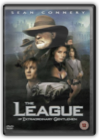 The heroes of 1899 are brought to life with the help of some expensive special effects in The League of Extraordinary Gentlemen. From the pages of Victorian literature come Captain Nemo, Dr Jekyll (and his alter ego Mr Hyde), Dorian Gray, Tom Sawyer, the Invisible Man, Mina Harker (from Dracula), and the hunter Allan Quatermain (Sean Connery), all assembled to combat an evil megalomaniac out to conquer the world.
It's hardly an original plot, but perhaps that's fitting for a movie sewn together like Frankenstein's monster. It rushes from one frenetic battle to another, replacing sense with spectacle—Nemo's submarine rising from the water, a warehouse full of zeppelins bursting into flame, Venice collapsing into its own canals. It's flashy, dumb, and completely incoherent. Fans of the original comic book will be disappointed. —Bret Fetzer The Time Machine [DVD] [2002]
To Kill A Mockingbird [DVD]
The Osterman Weekend [1983]
The Curious Case Of Benjamin Button [DVD] [2009]

The Horse Whisperer [1998]
 For director Robert Redford the trick was directing himself. The Oscar-winning director (Ordinary People, Quiz Show) says that he is one kind of actor (in the moment) and a different kind of director (more controlling). Whatever the problems, Redford has worked it out beautifully in this leisurely paced adaptation of Nicholas Evans's bestseller, The Horse Whisperer. When the prized horse of New Yorkmagazine editor's (Kristen Scott Thomas) daughter suffers a horrible accident, she tracks down Tom Booker (Redford), a Montana horse healer who is known for working magic. Soon East Coast brashness meets Old West simplicity as the reluctant Annie takes her even more reluctant daughter (Scarlett Johansson) to Marlboro country. Booker's influence goes beyond the horse through healing the heart of daughter and mother. The 2-hour and 44-minute film is a beautiful travelogue of scene and sky (with a giant assist from Oliver Stone's usual cinematographer, Robert Richardson). Never complicated, the movie's rewards may be hidden in its length and Redford's tendency to introduce us to a way of life instead of focusing on a story. The major deviation from the end of Evans's novel is a welcomed change. —Doug Thomas
Withnail And I [1986]
Wallace & Gromit: The Curse of the Were-Rabbit [2005] (and A Matter of Life and Death)
The Waterboy [DVD] [1999]
The Longest Yard [DVD] [2005]
The plot sets him as an ex-American footballer, who is sent to prison following a car accident. There, he finds himself putting together a team of convicts to face off against the prison guards, an opportunity that many of the prisoners simply don’t want to pass up. And that pretty much sets the stage for a fast-paced, frequently-funny comedy that doesn’t eclipse the original by any means, but is a worthy testament to it. Its main strength is its cast. Alongside Sandler himself are a collection of names from the American Football scene, but British audiences are more likely to warm to Chris Rock. He pretty much steals good chunks of the movie from under Sandler’s nose, and some of the film’s finest moments are down to him. Granted, The Longest Yard hardly sets new ground for comedies, and neither is it the finest laugh-fest of the last few years. But it is fun, it is funny, and for Adam Sandler and Chris Rock fans in particular, it’s a fine way to spend a couple of hours. Worth a spin.—Simon Brew The Client [1994] [DVD]
Terminator 3: Rise of the Machines (Single Disc Edition) [2003]
With Breakdown and U-571 serving as rehearsals for this cautionary epic of mass destruction, director Jonathan Mostow wisely avoids any stylistic connection to James Cameron's classics; instead he's crafted a fun, exciting popcorn thriller, humorous and yet still effectively nihilistic, and comparable to Jurassic Park III in returning the Terminator franchise to its potent B-movie roots. —Jeff Shannon On the DVD: Terminator 3 two-disc set has only one deleted scene, but it's first-class. The "Sgt Candy Scene" is a must-see and, unfortunately, the best thing on the second disc. The rushed HBO documentary shows us far more flash than substance. Better is the Visual Effects Lab that goes more in-depth with four sequences, although you need to wade through a weak interface for each segment. Making your "own" effects isn't that much fun; you can only choose a few effects that change in two scenes. Anyone looking to get the complicated backstory of the trilogy figured out should dig into the "Sky Net Database" and an intricate timeline. Disc 1 has a 30-second intro from the Governator himself, plus two commentary tracks: director Jonathan Mostow goes into great detail on how the little things (from lighting street scenes to tricks for destroying buildings) count; the second track is pieced together from the actors recorded separately—here Mostow appears with actress Claire Danes doing her first commentary track. The anamorphic 2.40:1 widescreen picture and thunderous DTS 5.1 or Dolby Digital 5.1 sound options deliver everything you would expect. —Doug Thomas The Usual Suspects [1995]
 Ever since this convoluted thriller dazzled audiences and critics in 1995 and won an Oscar for Christopher McQuarrie's twisting screenplay, The Usual Suspectshas continued to divide movie lovers into opposite camps. While a lot of people take great pleasure from the movie's now-famous central mystery (namely, "Who is Keyser Söze?"), others aren't so easily impressed by a movie that's too enamoured of its own cleverness to make much sense. After all, what are we to make of a final scene that renders the entire movie obsolete? Half the fun of The Usual Suspectsis the debate it provokes and the sheer pleasure of watching its dynamic cast in action, led (or should we say, mislead) by Oscar-winner Kevin Spacey as the club-footed con man who recounts the saga of enigmatic Hungarian mobster Keyser Söze. Spacey's in a band of thieves that includes Gabriel Byrne, Stephen Baldwin, Kevin Pollak, and Benicio Del Toro, all gathered in a plot to steal a large shipment of cocaine. The story is told in flashback as a twisted plot being described by Spacey's character to an investigating detective (Chazz Palmintieri), and The Usual Suspectsis enjoyable for the way it keeps the viewer guessing right up to its surprise ending. Whether that ending will enhance or extinguish the pleasure is up to each viewer to decide. Even if it ultimately makes little or no sense at all, this is a funny and fiendish thriller, guaranteed to entertain even its vocal detractors. —Jeff Shannon
X-Men 2 Special Edition DVD (Two Disc Set) [2003]
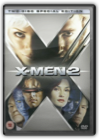 X-Men 2picks up almost directly where X-Menleft off: misguided super-villain Magneto (Ian McKellen) is still a prisoner of the US government, heroic bad-boy Wolverine (Hugh Jackman) is up in Canada investigating his mysterious origin, and the events at Liberty Island (which occurred at the conclusion of X-Men) have prompted a rethink in official policy towards mutants—the proposed Mutant Registration Act has been shelved by US Congress. Into this scenario pops wealthy former army commander William Stryker, a man with the President's ear and a personal vendetta against all mutant-kind in general, and the X-Men's leader Professor X (Patrick Stewart) in particular. Once he sets his plans in motion, the X-Men must team-up with their former enemies Magneto and Mystique (Rebecca Romjin-Stamos), as well as some new allies (including Alan Cumming's gregarious, blue-skinned German mutant, Nightcrawler).
The phenomenal global success of X-Menmeant that director Bryan Singer had even more money to spend on its sequel, and it shows. Not only is the script better (there's significantly less cheesy dialogue than the original), but the action and effects are also even more stupendous—from Nightcrawler's teleportation sequence through the White House to a thrilling aerial dogfight featuring mutants-vs-missiles to a military assault on the X-Men's school/headquarters to the final showdown at Stryker's sub-Arctic headquarters. Yet at no point do the effects overtake the film or the characters. Moreso than the original, this is an ensemble piece, allowing each character in its even-bigger cast at least one moment in the spotlight (in fact, the cast credits don't even run until the end of the film). And that, perhaps, is part of its problem (though it's a slight one): with so much going on, and nary a recap of what's come before, it's a film that could prove baffling to anyone who missed the first instalment. But that's just a minor quibble—X-Men 2is that rare thing, a sequel that's actually superior to its predecessor. —Robert Burrow X-Men
 Although the superhero comic book has been a duopoly since the early 1960s, only DC's flagship characters, Superman and Batman (who originated in the late 1930s) have established themselves as big-screen franchises. Until now—this is the first runaway hit film version of the alternative superhero X-Menuniverse created for Marvel Comics by Stan Lee, Jack Kirby and others. It's a rare comic-book movie that doesn't fall over its cape introducing all the characters, and this is the exception. X-Mendrops us into a world that is closer to our own than Batman's Gotham City, but it's still home to super-powered goodies and baddies. Opening in high seriousness with paranormal activity in a WW2 concentration camp and a senatorial inquiry into the growing "mutant problem", Bryan Singer's film sets up a complex background with economy and establishes vivid, strange characters well before we get to the fun. There's Halle Berry flying and summoning snowstorms, James Marsden zapping people with his "optic beams", Rebecca Romijn-Stamos shape-shifting her blue naked form, and Ray Park lashing out with his Toad-tongue. The big conflict is between Patrick Stewart's Professor X and Ian McKellen's Magneto, super-powerful mutants who disagree about their relationship with ordinary humans, but the characters we're meant to identify with are Hugh Jackman's Wolverine (who has retractable claws and amnesia), and Anna Paquin's Rogue (who sucks the life and superpowers out of anyone she touches). The plot has to do with a big gizmo that will wreak havoc at a gathering of world leaders, but the film is more interested in setting up a tangle of bizarre relationships between even more bizarre people, with solid pros such as Stewart and McKellen relishing their sly dialogue and the newcomers strutting their stuff in cool leather outfits. There are in-jokes enough to keep comics' fans engaged, but it feels more like a science fiction movie than a superhero picture. —Kim Newman
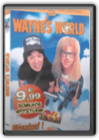
Wayne's World [1992] (and Holes)
Tomorrow Never Dies [1997] (REGION 1) (NTSC)
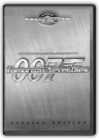 Pierce Brosnan returns for his second stint as James Bond (after GoldenEye) and he's doing it in high style with an invigorating cast of co-stars. It's only appropriate that a Bond film from 1997 would find Agent 007 pitted against a media mogul (Jonathan Pryce) who's going to start a global war—beginning with stolen nuclear missiles aimed at China—to create attention-grabbing headlines for his latest multimedia news channel. It's the information age run amok and Bond must team up with a lovely and lethal agent from the Chinese External Security Force (played by Hong Kong action star Michelle Yeoh) to foil the madman's plot of global domination. Luckily for Bond, the villain's wife (Teri Hatcher) is one of his former lovers and, at the behest of his superior M (Judi Dench), 007 finds ample opportunity to exploit the connection. Although it bears some nagging similarities to many formulaic action films from the '90s, Tomorrow Never Dies(with a title song performed by Sheryl Crow) boasts enough grand-scale action and sufficiently intelligent plotting to suggest the Bond series has plenty of potential to survive into the next millennium. Armed with the usual array of gadgets (including a remote-controlled BMW), Brosnan settles into his role with acceptable flair and the dynamic Yeoh provides a perfect balance to the sexism that once threatened to turn Bond into a politically incorrect anachronism. He's still Bond, to be sure, but he's saving the world with a bit more sophisticated finesse. —Jeff Shannon
Vertigo [DVD]
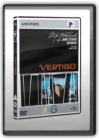
On the DVD: This disc presents the superb restored print of this film in a wonderful widescreen (1.85:1) anamorphic transfer, with remastered Dolby digital soundtrack. There's a half-hour documentary made in 1996 about the painstaking two-year restoration process, plus an informative commentary from the restorers Robert Harris and James Katz, who are joined by original producer Herbert Coleman. There are also text features on the production, cast and crew, plus a trailer for the theatrical release of the restoration. This is an undeniably essential requirement for every DVD collection. —Mark Walker Zoolander Dvd [2001]
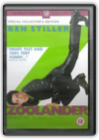 Ben Stiller originally created the vacuous male model hero of Zoolanderfor the VH1 Fashion Awards. In his big-screen appearance, Stiller's Derek Zoolander is New York's top model and proud creator of the tight-lipped "facial expression" Blue Steel. However, competition comes in the shape of equally empty-headed young buck Hansel (Owen Wilson), who wins the coveted male model of the year award, much to Derek's dismay. When Derek's vapid friends are then incinerated in an unfortunate petrol station incident he is left vulnerable and alone, perfect fodder for fashion designer supremo Mugatu (a brilliantly surreal Will Ferrell) to hatch a plot of Manchurian Candidate-sized proportions in which Derek is brainwashed into assassinating the Malaysian Prime minister at a fashion show. Derek enlists the help of investigative journalist (Christine Taylor) and even Hansel himself in an attempt to thwart Mugatu's devious plot.
Zoolanderworks thanks to the central performances. Stiller is endearing in his one-dimensional ineptitude, Wilson is shallow hippie cool personified, and there are some great cameos by the likes of David Duchovny as a Deep Throat-esque informer, Milla Jovovich as the eastern European sadomasochistic henchwoman and Jon Voight as Zoolander's coal mining dad. A constant parade of other celebs pop up throughout playing themselves. Admittedly it's a one-joke film, but there are some classic scenes along the way and at its best Zoolanderis an entertaining dig at an industry that takes itself far too seriously. On the DVD:Zoolandercomes to DVD in an anamorphic 2.35:1 widescreen presentation that's clear and crisp with strong colours, which perfectly shows off the cartoonish style of the film. The audio is consistently sharp. Extra junkies will find plenty of material: deleted scenes, including an extended "Mine" scene and Winona Ryder trying to pick-up Hansel; amusing outtakes; and a great commentary from Ben Stiller with writers Drake Sather and John Hamburg. Best of all is the original VH1 Fashion Show skits which were the inspiration for the film. —Kristen Bowditch Talk Radio
The Devil Wears Prada [DVD] [2006]

The Great Escape (2 Disc Special Edition) [1963]
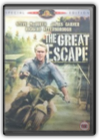 The Great Escapeimage of Steve McQueen (as "The Cooler King") astride his motorcycle has entered silver-screen iconography, alongside Brando on his bike from The Wild One. Based on a true story about a group of POWs who mount a daring breakout from a supposedly inescapable Nazi prison camp, this rousing and suspenseful World War II epic features an all-star cast, including James Garner, Richard Attenborough, Charles Bronson, Donald Pleasence, James Coburn, and David McCallum. —Jim Emerson
Where Angels Fear to Tread [1991]
The Final Countdown [1980] (and Forbidden Planet)
Toy Story 2 [2000]
 John Lasseter and his gang of high-tech creators at Pixar create another entertainment for the ages. Like the handful of other great movie sequels, Toy Story 2comments on why the first one was so wonderful while finding a fresh angle worthy of a new film. The craze of toy collecting becomes the focus here, as we find out Woody (voiced by Tom Hanks) is not only a beloved toy to Andy but also a rare doll from a popular 60s children's show. When a greedy collector takes Woody, Buzz Lightyear (Tim Allen) launches a rescue mission with Andy's other toys. To say more would be a crime because this is one of the most creative and smile-inducing films since, well, the first Toy Story.
Although the toys look the same as in the 1994 feature, Pixar shows how much technology has advanced: the human characters look more human, backgrounds are superior, and two action sequences that book-end the film are dazzling. And it's a hoot for kids and adults. The film is packed with spoofs, easily accessible in-jokes and inspired voice casting (with newcomer Joan Cusack especially a delight as Cowgirl Jessie). But as the Pixar canon of films illustrates, the filmmakers are storytellers first. Woody's heart-tugging predicament can easily be translated into the eternal debate of living a good life versus living for forever. Toy Story 2was deservedly a huge box-office success. —Doug Thomas, Amazon.com Xena - Warrior Princess - 2.25 / 2.26 / 2.27 - Orphan Of War / Remember Nothing / Giant Killer [1996]
 Xena—you gotta love her: after all, she could snap your neck just by straightening her knees. She sprang fully armed from Sam Raimi's head in March 1995, to flesh out an otherwise routine episode of the television series Hercules, a 5' 10" high-kicking, horse-riding, chakram-throwing ancient-Greek-warrior princess, who mustered armies the way some women shop for shoes, turning heroes against one another as gleefully as she laid waste to sweet little villages.
Except that somewhere beneath that straight dark fringe and hard-boiled leather breastplate lurk doubts, feelings, even a soul. She was so popular on Herculesher spin-off was an instant certainty—and pretty soon the subtext of her own series was unfolding. Xena is on journey from evil to good, but this can only be enabled via the companionship of bossy redhead scribe/bard Gabrielle, her constant companion. Set in a lush New Zealand doubling for the pagan Mediterranean, as misruled by Ares, Aphrodite, Poseidon and the rest of the Mount Olympus gang, Xena: Warrior Princessrecounts these exploits, as the duo confront gods, monsters, warlords, idiots and anachronisms, as well as their own flaws and desires, at the hilarious and sometimes unsettling mythological cross-roads where touchy-feelly Californian feminism meets high-camp chop-socky pantheism seasoned with the Way of Peplum Tao. —Honey Glass In the second series (first aired US 1996-97) Xena and Gabrielle (plus goofy side-sidekick the Joxer) meet the Fates, the (surprisingly Gothic) Bacchae, Ulysses, Cupid, Goliath, Santa Claus and (perhaps) the baby Jesus, as well as full-on Xena foe Julius Caesar and her former healer-mentor M'Lila. While filming this series, Xena actress Lucy Lawless was thrown by a horse on Tonight with Jay Leno, and injured: hence a sudden slew of swapped-body stories (Callisto, Autolycus and Gabrielle each have to mimic Xena for an episode), while domestic comedy and/or parody stories contribute to the medically advisable action-lite plot lines. Meanwhile, Callisto murders Gabrielle's hubby-to-be, and the narrative tension deepens. —Honey Glass Wainwright Walks: Complete BBC Series 1 & 2 Box Set
The Wicker Man [DVD] [1973]
|


Peter Hitchmough
Collection Total:
337 Items
337 Items
Last Updated:
Dec 25, 2011
Dec 25, 2011
 Made with Delicious Library
Stockport, Cheshire zipflap congrotus delicious library Hitchmough, Peter